

MES use cases
Shanghai Automobile Brake System Co., Ltd. (SABS)
Shanghai Automobile Brake System Co., Ltd. (SABS) is a joint venture between Germany's Continental AG and Shanghai Automotive Industry Corporation (Group). Its main products are ABS anti-lock braking systems, brake calipers, boosters, sensors and brake hoses. Production covers three modes: machining, electroplating and assembly.
Following the principle of "unified planning, step-by-step implementation", SABS built up the MES system step by step over several years. The system covers the machining, electroplating and assembly workshops and includes equipment integration, SAP integration, production planning, production execution, production monitoring, quality management, TPM and production traceability.
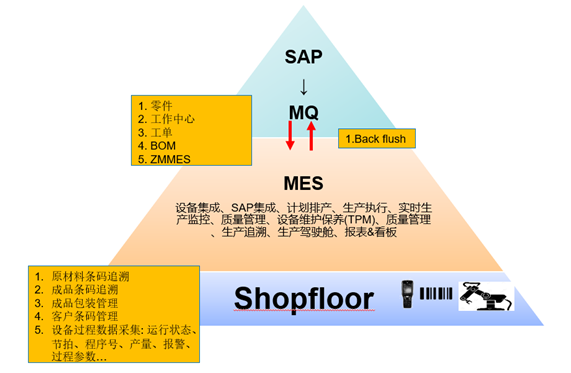
After the system went live, the following were achieved:
Rapid statistical analysis, traceability and queries
Faster exception response
Reduced work-in-process inventory and production waste
Higher production efficiency and output
Simplified workflows and reduced personnel workload
Lanzhou Institute of Space Technology Physics
The Lanzhou Institute of Space Technology Physics (Institute 510) under the China Academy of Space Technology (CASC) is one of China's first units directly engaged in the development of space vehicles and a backbone institute in the field of space technology. Its Pressure Vessel Business Department adopted the MES system to build a production management system on the shop floor that delivers information transparency and process visualization, enabling fast plan release, shop-floor scheduling control and full quality traceability.
Optimized planning workflow: time- and resource-based dual-axis scheduling avoids production bottlenecks. Rationally allocates labor, equipment and other resources to improve production efficiency and resource utilization.
Effective shop-floor guidance: real-time access to the latest production documents, with barcode scanning and serial-number control to standardize production processes.
Real-time production tracking: captures shop-floor status, key equipment status and product-production progress to keep production on schedule while collecting and recording data in real time.
Real-time inspection data capture: reports quality issues immediately and builds a quality-inspection database for easy query and traceability.
Transparent production status: enables relevant personnel to monitor actual production status in real time.
Jiangsu Etern
Jiangsu Etern Co., Ltd. is located in the Fenhu High-Tech Industrial Development Zone, Wujiang District, Suzhou City, at the junction of Jiangsu, Zhejiang and Shanghai in the Yangtze River Delta. Founded in 1978, after more than 30 years of hard work and rapid development, it has become a large, comprehensive high-tech enterprise integrating industry, investment and domestic/foreign trade. The Etern optical-cable smart-manufacturing project covers three production lines: sheathing, cabling and jacketing. The system implementation includes planning management, production execution, quality management, line-side warehouse management, equipment management and statistical analysis. Project duration: 8 months.
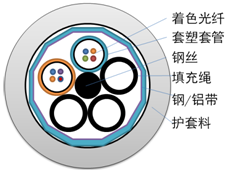
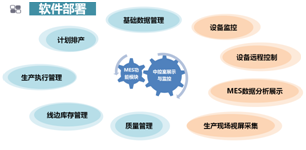
Through the new system, Jiangsu Etern's smart-model workshop achieved:
Output increased by 30%
Workforce reduced by 18%
Product pass rate increased by 15%
Improved customer satisfaction
FAW Wuxi Fuel Injection Equipment Research Institute
The Wuxi Fuel Injection Equipment Research Institute mainly develops internal-combustion-engine fuel injection systems, combustion systems, intake systems, valve-train mechanisms, supercharging technology, alternative fuels, hybrid power and IC-engine structural strength. Key features of the system include production scheduling, shop-floor process control, quality management and inspection-equipment integration.
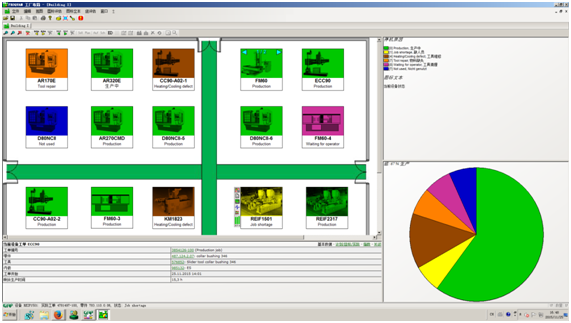
The MES system for the institute's workshop covers the machining and assembly of injector bodies. Through the implementation it simplifies and standardizes operations and accurately maps the production flow.
Visualized workshop status improves management's agile response to shop-floor exceptions.
Advanced scheduling combining intelligent optimization algorithms with human experience improves the feasibility and effectiveness of shop-floor plans.
Connects information and material flows, enabling just-in-time material delivery and shorter production cycles.
Systematized quality-management workflow standardizes quality data and improves traceability of quality issues.
Provides a management platform for shop-floor manufacturing resources, improving turnover and utilization.
Cascade analysis of shop-floor manufacturing data delivers real-time production status and trends, supporting management decisions.