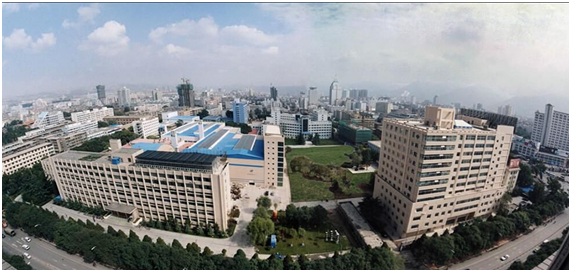

Aerospace MES solution
Industry Trends
Since the 12th Five-Year Plan, the defense industry has been developing rapidly with heavy tasks and high requirements. Completing defense-product tasks on time and with high quality has become the main challenge for defense manufacturers, and this challenge is raising the bar for their core management capabilities. Introducing information-based management is an important way to enhance these capabilities and an inevitable trend for the industry's development.
In May 2015 the State Council issued "Made in China 2025", laying out a manufacturing-power strategy. It strongly promotes the deep integration of informatization and industrialization and supports new-generation IT industries and aerospace equipment. Defense manufacturing informatization has entered a period of rapid development. EMFA provides professional solutions and mature systems to support enterprise informatization.

Main Issues
The main issues currently faced by the defense manufacturing industry:
Shop-floor feedback is not timely, making it difficult for planning managers to obtain accurate schedule progress.
Material kitting information cannot be obtained in time; production waste caused by material shortages cannot be avoided, and smooth production cannot be guaranteed.
Customized design, multi-variety and small-batch production with heavy task loads make scheduling complex. There is a lack of visual resource-evaluation tools for planning, making scheduling difficult and inefficient.
Shop-floor information is opaque; rapid response to exceptions cannot be achieved.
Some products require an individual quality file for every single item, demanding accurate production-process quality records for each piece.
Production data remains on the shop floor and is hard to obtain. Most data is collected manually, so accuracy and timeliness cannot be guaranteed, and real-time traceability is hard to achieve.
Overall Solution
By establishing an MES-centered production management system integrated with related information systems, a complete production information-management platform is formed.
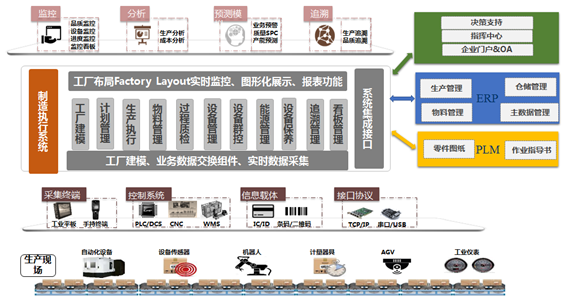
The objectives of informatization are:
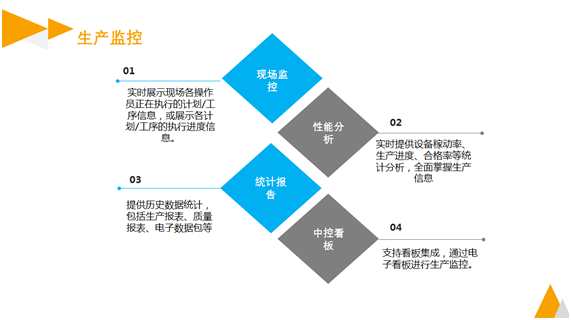
Through real-time monitoring of plan execution, quickly obtain schedule-progress information to support managers in controlling production and adjusting plans.
Integrate with the warehouse system to obtain kit information quickly; pull materials on demand to avoid production-waiting waste caused by shortages.
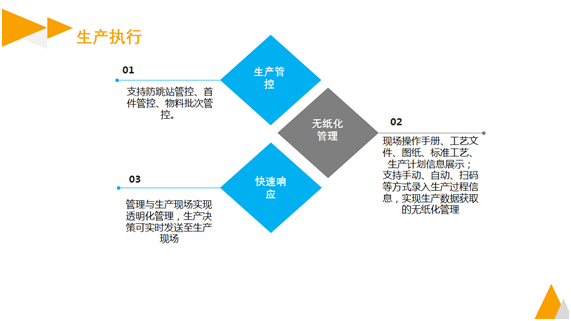
Visual interfaces and visual management display shop-floor information in real time and feed back status and issues to managers for rapid response.
Dynamic plan adjustments support order changes, insertions and splits for higher adaptability. Resource-bottleneck analysis detects conflicts early and mitigates schedule-delay risks caused by resource shortages.
Real-time statistical reports provide production progress, plan-completion rate, pass rate and working hours at any time.
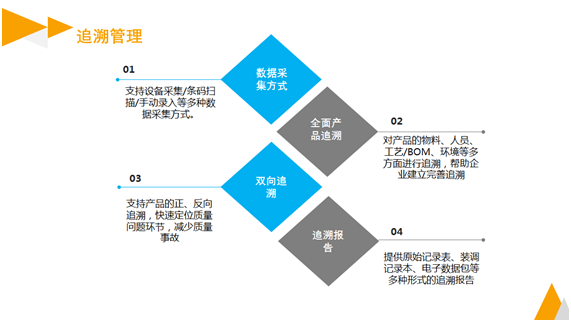
Unified control of production-process data enables forward and reverse product traceability and quick access to historical production information.
System Implementation Plan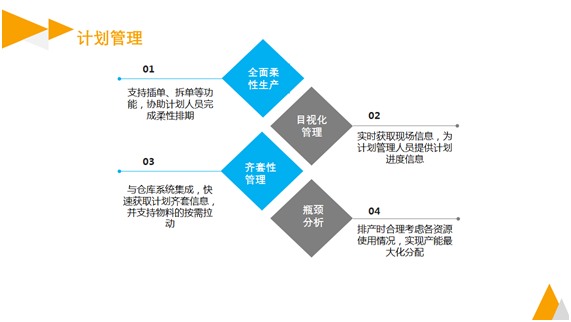
Benefits of MES
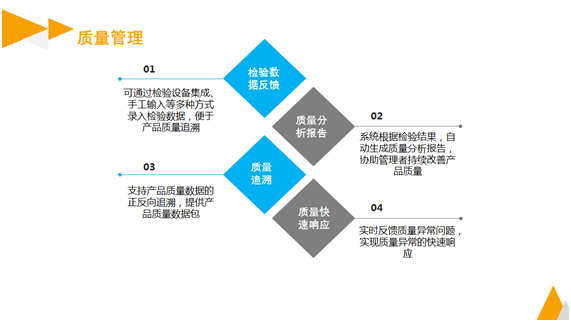
Through MES, production planning, execution, quality, traceability and production monitoring are comprehensively controlled digitally. Production becomes more transparent, controllable and optimized, improving efficiency, reducing costs and raising product quality.
Paperless management eliminates paperwork and the related errors.
Accurately grasp production status, obtain schedule-progress information, plan production rationally and improve on-time delivery.
Quickly obtain task-kit information to avoid material-shortage bottlenecks and improve production efficiency.
Reduce manual statistics and hand-written reports; improve shop-floor management productivity.
Accurately know the quantity of work-in-process and trace defects; reduce WIP cost.
Increase visibility of shop-floor events, achieve rapid response to production exceptions and improve management control and communication, with easier monitoring of upcoming issues.
React quickly to quality issues, trace quality-inspection history, improve product quality and achieve continuous improvement.
Real-time shop-floor information makes production planning and scheduling more accurate and effective.
Case Study
The Lanzhou Institute of Space Technology Physics (Institute 510) under the China Academy of Space Technology (CASC) is one of the first units in China to be directly involved in the development of space vehicles and is a backbone institute in the field of space technology.
The Pressure Vessel Business Department adopted EMFA's MES system. With workshop production management as the main line, it built a transparent and visualization-based production-management system, enabling fast plan release, workshop scheduling control and full quality traceability.