

Low Testing Efficiency? One-Click Unlock for Efficient BMS Validation
Introduction
In the fast-growing new energy industry, the battery system serves as the core "energy reservoir" for new energy vehicles and energy storage equipment. Its performance and service life directly determine the ultimate performance of the product. The brain at the core — the Battery Management System (BMS) — must not only ensure the safety and stability of the battery but also guarantee high performance and long endurance.
Under these dual demands, BMS testing faces tremendous challenges.
So, what is the main goal of BMS testing? To ensure safety and performance.
Ensuring safety is the primary goal of testing, and the baseline and red line for any product.
Through professional equipment simulating various normal, boundary, and fault conditions, testing verifies whether the BMS can timely and accurately predict, diagnose, and handle dangerous situations such as overcharge, over-discharge, overheating, and short circuit — preventing thermal runaway and reducing risks to life and property.
Ensuring performance means that, after securing the safety baseline, long endurance and battery lifespan must be guaranteed to provide an excellent user experience.
This requires the BMS "brain" to be intelligent enough — including accurate estimation of SOC and SOH, optimization of charge–discharge strategies, and effective cell balancing functionality.
Do You Face These Challenges in BMS Testing?
1. Incomplete Test Scenario Coverage
Extreme conditions: −45 °C to 85 °C temperature extremes, charge/discharge cycles, etc.
Fault conditions: cell voltage disconnection (short circuit), CAN communication interruption, temperature sensor failure, etc.
2. Low Testing Efficiency
Low reusability of test cases; new platform projects require redevelopment of test cases.
3. High Cost in Time, Labor, and Resources
Limited manpower and test equipment, tight testing schedules.
Fault conditions difficult to reproduce; reproductions may be irreversible, increasing cost.
Our Advantages — Targeting Your Pain Points
Reliable HIL Test Platform
Through the HIL device, real battery packs, sensors, and loads are simulated and connected with the real BMS, building a highly realistic testing environment in the lab.
This allows functional and logic verification to check whether all BMS functions — such as voltage/current/temperature acquisition, relay control, insulation detection, fault diagnosis, and storage — are correctly implemented, while also simulating various faults and extreme conditions.
1. Vector-Based HIL Hardware Platform
VT system & VN devices: Provide abundant digital I/O, analog I/O, PWM I/O, communication interfaces (CAN/LIN/ETH), and various sensor signals.
Real-time processor: Powerful CPU performance ensures high real-time capability.
2. High-Precision Cell Voltage and Temperature Simulators
Can simulate serial connection of individual cells.
Support both active and passive balancing.
Simulate sampling line disconnection, short circuit, reverse polarity, etc.
Temperature simulator supports open/short circuit faults, and extreme conditions such as over-temperature and low temperature.
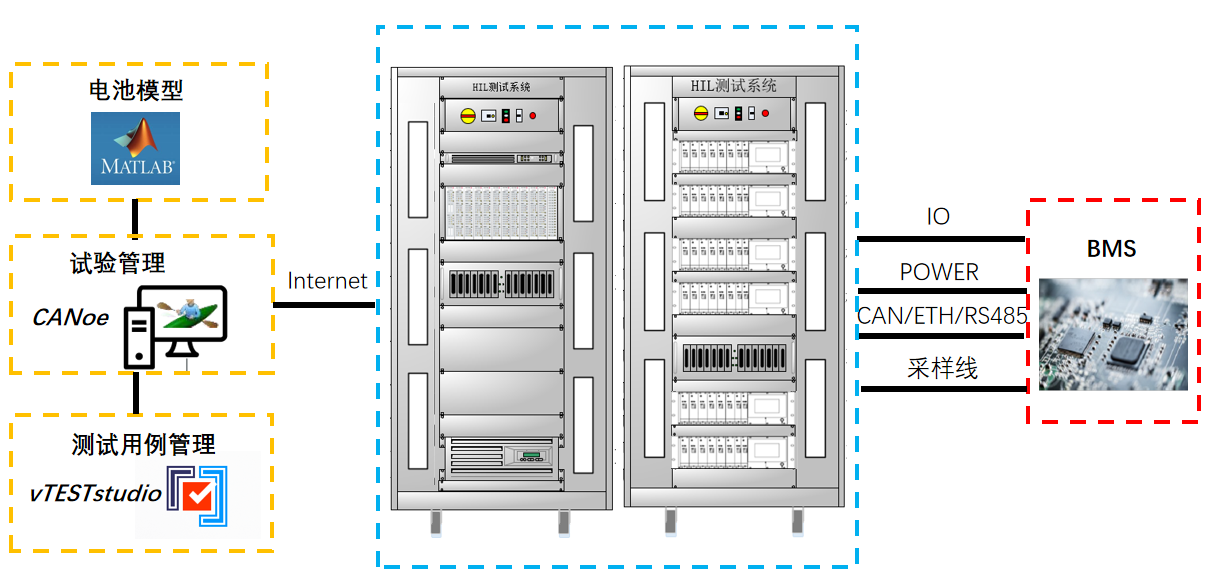
Illustration of HIL platform connecting BMS with simulated components
3. Flexible High-Voltage Loop Simulation
Supports voltages up to 2000 V and can simulate diverse HV circuits for different vehicle projects.
Allows fast adaptation and simulation of pre-charge functionality.
Supports various HV fault injections (main positive/negative relay sticking or disconnection, etc.).
4. Extensive Fault Injection Modules
Simulate faults in sensors, actuators, harnesses, and power communication systems.
Support open circuit, short circuit, short-to-power, short-to-ground, and inter-channel short simulations.
Integrate with test management software for automation.
5. Professional Test Software and Toolchain
Test Management Software — CANoe
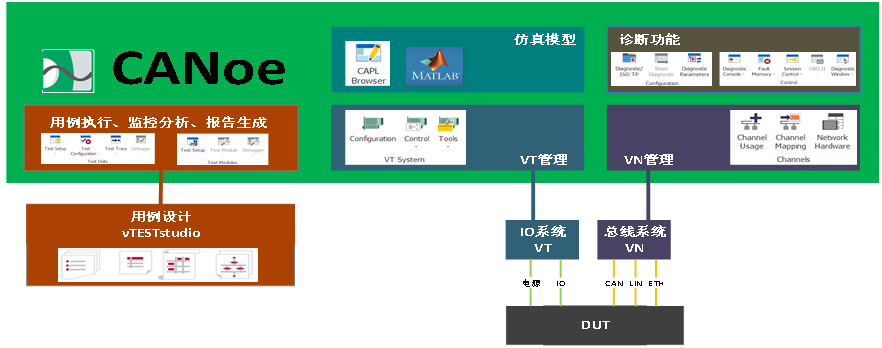
Screenshot of CANoe interface showing BMS signal monitoring
Test Case Management Software — vTESTstudio
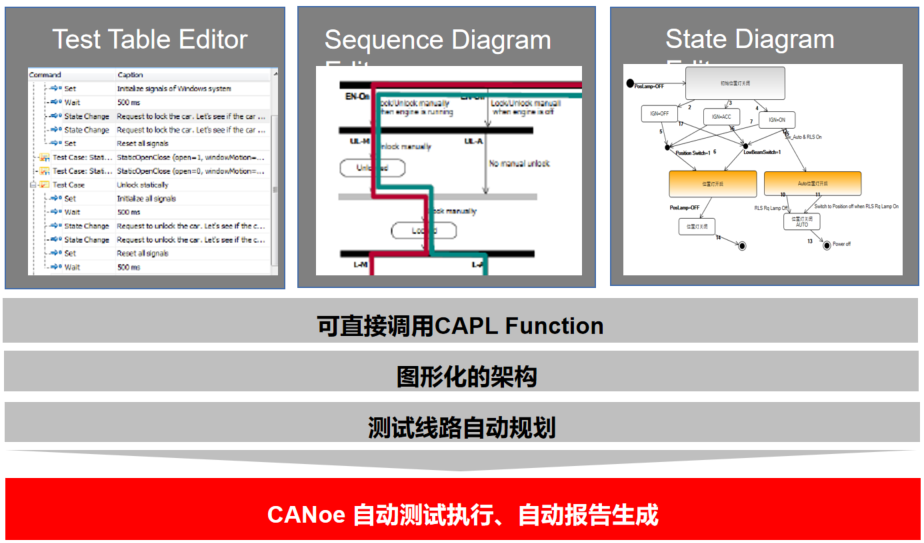
Screenshot of vTESTstudio test case configuration window
Comprehensive Test Case Library
Based on customer functional requirements and specifications, textual test cases are extracted, reviewed, and converted into automated test scripts.
We also maintain a library of 2000+ BMS test cases to ensure complete coverage.
Automotive BMS full-function coverage:
Sleep/wake-up, HV–LV management, DC/AC charging, low-temp & low-SOC, low-temp & high-SOC, thermal management, and high-voltage safety protection.
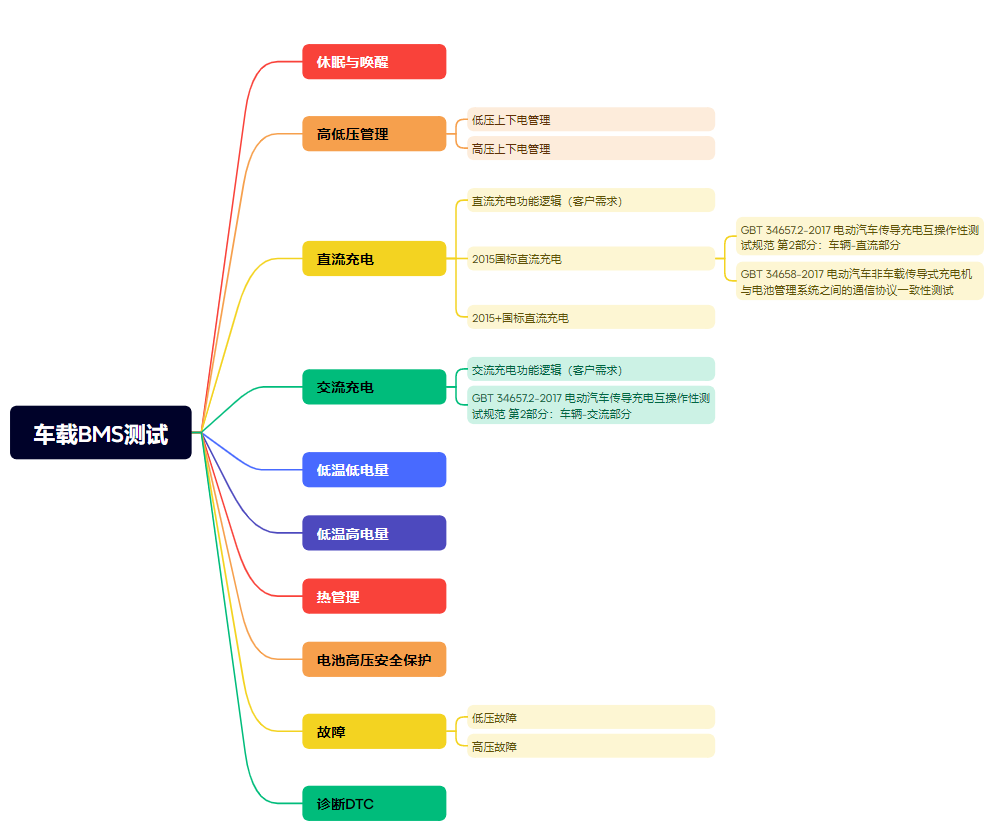
Energy storage BMS testing:
Full-function coverage compliant with GB/T 34131-2023 Battery Management Systems for Energy Storage Applications.
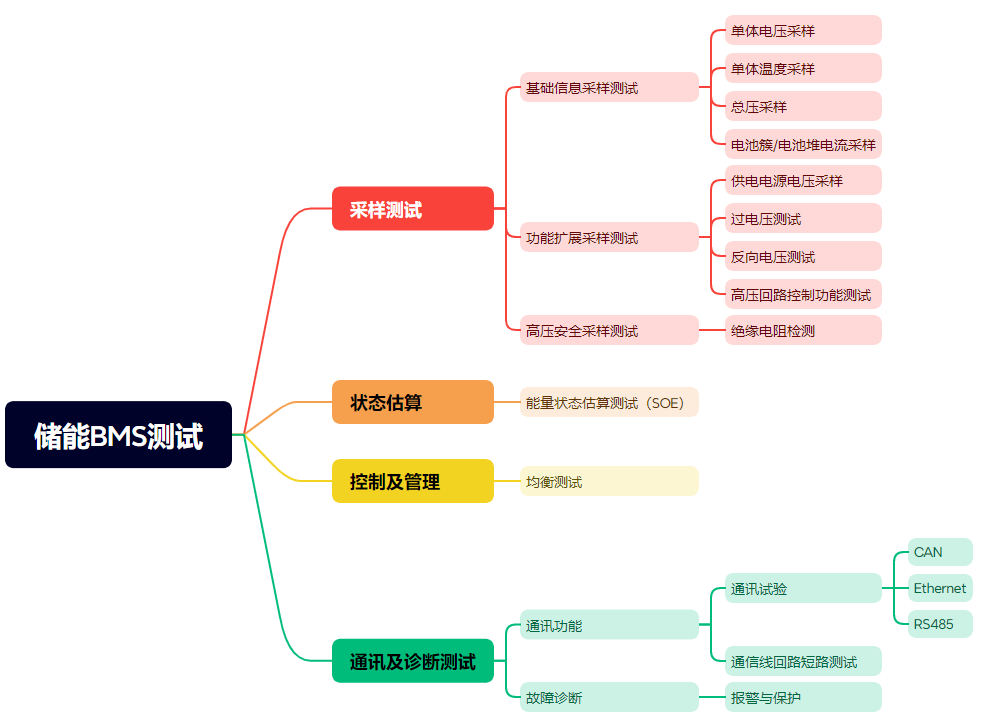
Fault injection and diagnostic testing:
HV/LV fault simulation and DTC diagnostic verification.
Experienced Testing Team & Process Management
As a third-party certified testing service provider for multiple OEMs worldwide, Polelink maintains a complete and rigorous testing process — from requirements analysis to execution, reporting, issue tracking, and retesting — ensuring quality at every stage.
For BMS testing, Polelink offers complete testing services based on its self-developed BMS testing environment:
Full test hardware and simulation setup, including cell voltage and temperature simulation channels.
Meets all standard BMS testing needs.
Team members with 5+ years of automotive BMS HIL experience, familiar with major functions, industry pain points, and client requirements.
Provided energy storage testing systems and services for top domestic energy companies and the China Electric Power Research Institute.
Delivered 200+ BMS HIL systems to renowned traditional and emerging OEMs and Tier 1 suppliers, with extensive field experience.
Conclusion
Amid rapid iteration in new energy vehicles and related products, efficient and stable testing helps you stand out in the wave of competition.
Choosing Polelink is not just a one-time project — it’s a partnership built on trust, value creation, and shared success.