

How Exactly is DDS-TSN Implemented?
Overview
Independent Advantages and Limitations of TSN and DDS
With the continuous iteration of intelligent connected vehicles and in-vehicle network architectures, the requirements for real-time performance, determinism, and efficient data distribution in automotive networks are becoming increasingly stringent.
The combination of TSN and DDS provides in-vehicle Ethernet with the dual advantages of deterministic real-time communication (TSN) and flexible data distribution (DDS), making it especially suitable for high-demand scenarios such as autonomous driving and intelligent cockpits.
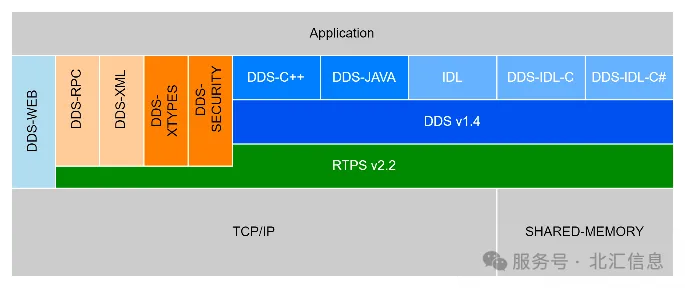
Figure 1 Overview of the DDS protocol
Data Distribution Service (DDS) is a set of standards formulated by the Object Management Group (OMG), designed to provide connectivity, interoperability, and portability for the Industrial Internet, cyber-physical systems, and mission-critical applications.
Its advantages are:
Efficient data distribution: Based on a publish-subscribe model, supporting dynamic data discovery and heterogeneous system interoperability, suitable for multi-sensor data sharing in vehicles.
Rich QoS policies: Provides 23 quality of service policies (such as latency budget, reliability), which can be flexibly adapted to different application scenarios.
Platform independence: Shields underlying OS and hardware differences, supporting cross-platform deployment from MCUs to domain controllers.
Its disadvantages are:
High resource overhead: The full DDS protocol stack places a heavy burden on resource-constrained devices such as MCUs, requiring lightweight tailoring.
Real-time performance depends on the underlying network: DDS QoS policies (such as latency control) require support from underlying technologies such as TSN to fully effective.
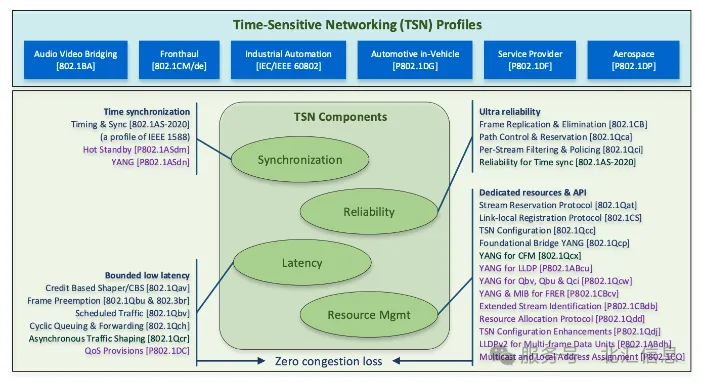
Figure 2 Overview of the TSN protocol
Time-Sensitive Networking (TSN) is a set of standards developed by the TSN Task Group under the IEEE 802.1 Working Group. Its goal is to achieve deterministic and highly reliable communication over standard Ethernet. By supporting different levels of quality of service (QoS), a single TSN network infrastructure can simultaneously transmit both time-critical and non-critical data.
Its advantages are:
Deterministic real-time transmission: Based on IEEE 802.1 standards (such as Qbv traffic scheduling, gPTP time synchronization), TSN ensures microsecond-level low-latency transmission of critical data (e.g., brake control signals).
Resource isolation and redundancy: Mechanisms such as frame preemption (Qbu) and frame replication and elimination (802.1CB) avoid network congestion and improve fault tolerance.
Standardized hardware compatibility: Relies on traditional Ethernet architecture, reducing deployment costs.
Its disadvantages are:
Complex configuration: Requires static planning of traffic priorities and time windows, making it difficult to adapt to dynamic scenarios (such as bursty V2X communication).
Only solves lower-layer problems: Cannot directly address application-layer real-time challenges (such as task scheduling jitter).
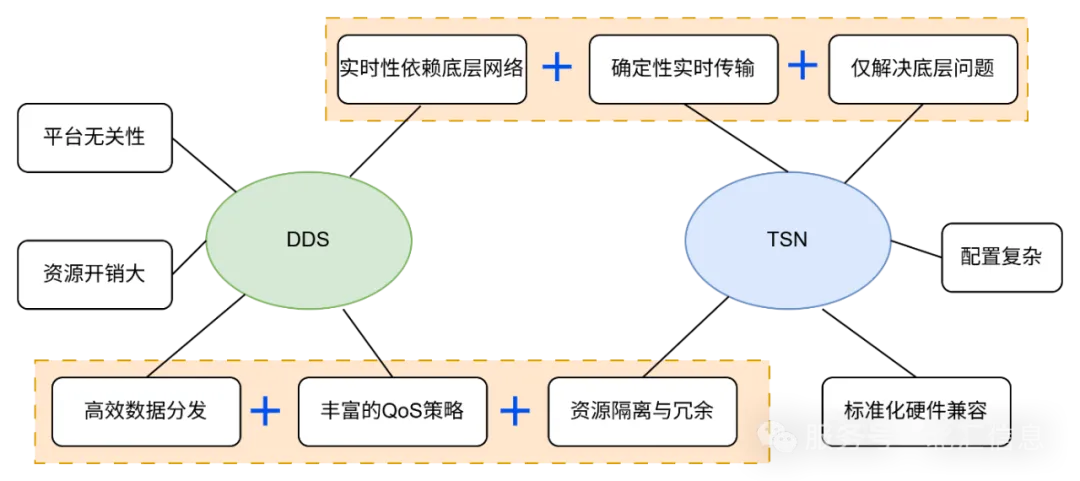
Figure 3 Independent advantages and disadvantages of TSN and DDS, and their synergistic effects
Have you noticed that these two technologies can be combined to complement each other and further produce synergistic effects?
Combination of the Two: Vertical Integration for Full-Stack Determinism
With the advancement of the OMG DDS-TSN specification, the fusion of the two can generate the following synergistic effects:
DDS defines at the application layer "what kind of real-time performance is needed" (What).
TSN solves at the network layer "how to achieve such real-time performance" (How).
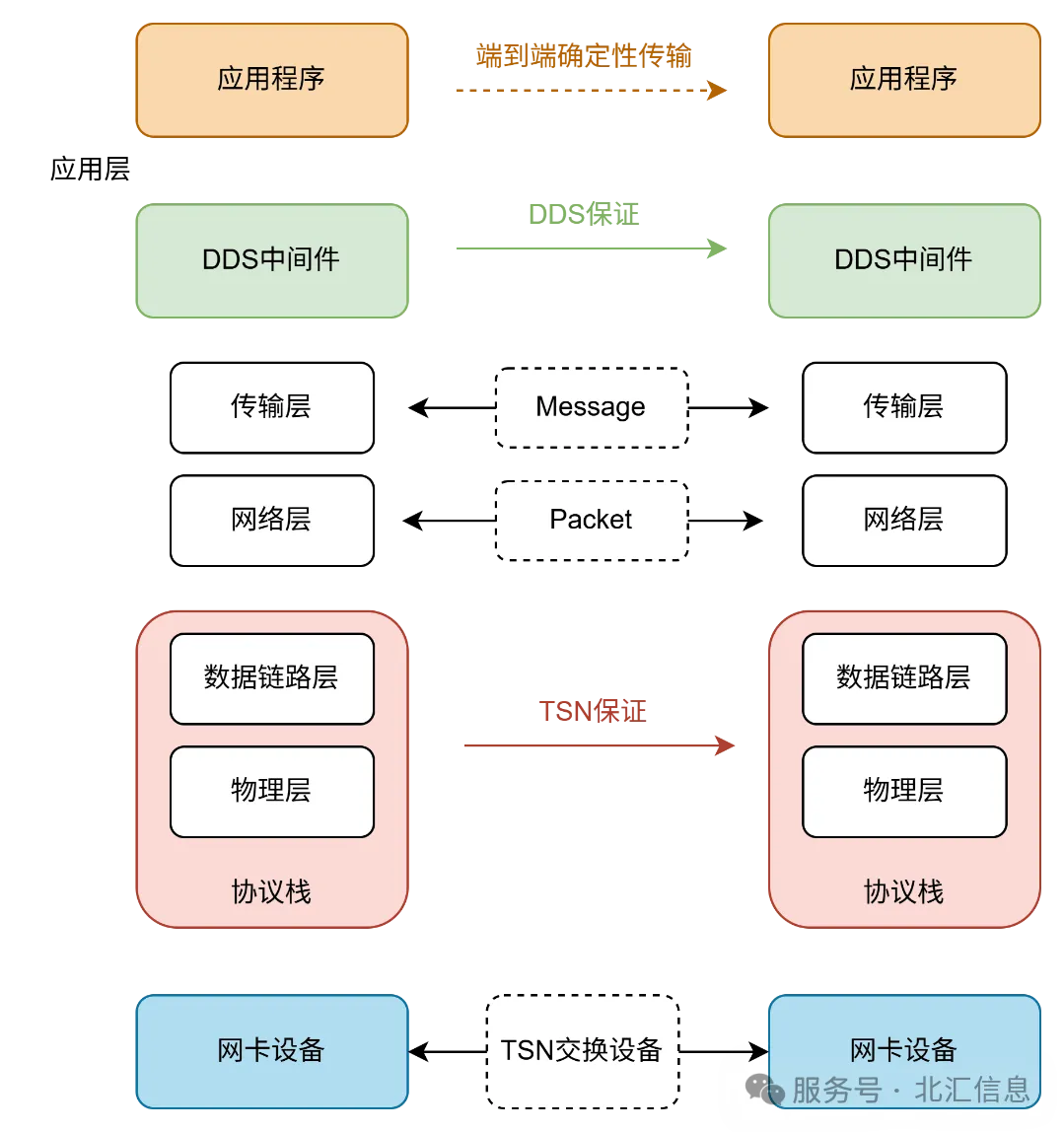
Figure 4 Realization of DDS-TSN integration
The integration can be divided into the following parts:
1. Layered Collaboration: Determinism from Application to Network
DDS, as middleware for network communication, manages data distribution logic through the publish-subscribe model and defines end-to-end QoS policies (such as deadlines, reliability, priority), but relies on the underlying network to meet its real-time needs.
TSN, as an underlying (L2) technology, provides deterministic transmission capabilities for Ethernet through mechanisms such as time synchronization, traffic scheduling, and frame preemption, but does not involve data semantics and logic at the application layer.
In summary, DDS’s QoS requirements (such as low latency, sequence guarantees) need TSN’s network capabilities, while TSN’s deterministic transmission requires DDS’s application-layer scheduling to coordinate. The combination of the two forms a closed loop of "application intent → network execution," realizing true end-to-end determinism.
2. Global Consistency of Time Synchronization
TSN achieves microsecond-level time synchronization across the network via IEEE 802.1AS, providing a basis for DDS’s global data space (such as timestamp consistency and event ordering). For example: DDS’s built-in TimeBasedFilter can be bound to the TSN gPTP clock, ensuring that data timeliness judgments are based on the same time reference.
3. Compatibility of Open Standards and Decoupled Architecture
DDS does not bind to a specific network protocol, and TSN does not constrain upper-layer applications—both are open standards.
This decoupled design allows:
DDS to achieve deterministic transmission through TSN networks while remaining compatible with non-TSN networks (e.g., traditional IP networks).
TSN to carry other protocols besides DDS (such as HTTP, DoIP), maximizing infrastructure utilization.
DDS-TSN Implementation
The implementation of DDS-TSN requires more than just theoretical explanation; it must go through the entire process of design and verification. The following will explain how to implement DDS-TSN in practice from several aspects: requirement evaluation, solution design, prototype building, evaluation metrics, and experimental results.
Requirement Evaluation
All network design schemes serve functional scenarios. At this stage, the key task is to translate functional requirements into use case descriptions, and from these, evaluate and identify requirements regarding data stream real-time performance, reliability, and architecture to facilitate subsequent TSN and DDS solution design.
By collecting and analyzing in-vehicle network communication application scenarios and examining application-layer communication requirements and constraints—for example, autonomous driving:
Time synchronization
Transmission delay constraints
Reliability: best effort or reliable retransmission
Link redundancy: whether data requires link redundancy
…
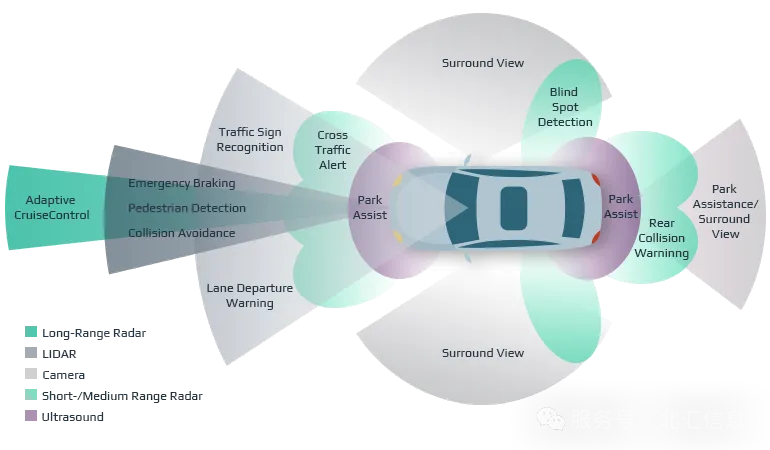
Figure 5 Functional scenarios related to autonomous driving
Solution Design
In designing a combined solution, there are two possible approaches:
Expand TSN on the basis of DDS design.
Expand DDS on the basis of TSN design.
This paper adopts the first approach: design the DDS system first, then deploy it on TSN to realize the integration of the two.
Mapping Between TSN Talker/Listener and DDS DataWriter/DataReader
DDS uses a strongly-typed, data-centric publish-subscribe model, where DataWriter is responsible for updating specific types of data, and matching DataReader listens for those updates.
TSN also has the concepts of Talker (sender) and Listener (receiver). A Talker can send data streams to multiple Listeners.
As defined in the OMG DDS-TSN specification, the specific mapping configuration is as follows:
Talker is defined as DataWriter (e.g., in the figure below, ECU1 acts as Talker1 of stream1, and is also DDS’s DataWriter1).
Listener is defined as DataReader (e.g., in the figure below, ECU2 acts as Listener1 of stream1, and is also DDS’s DataReader1).
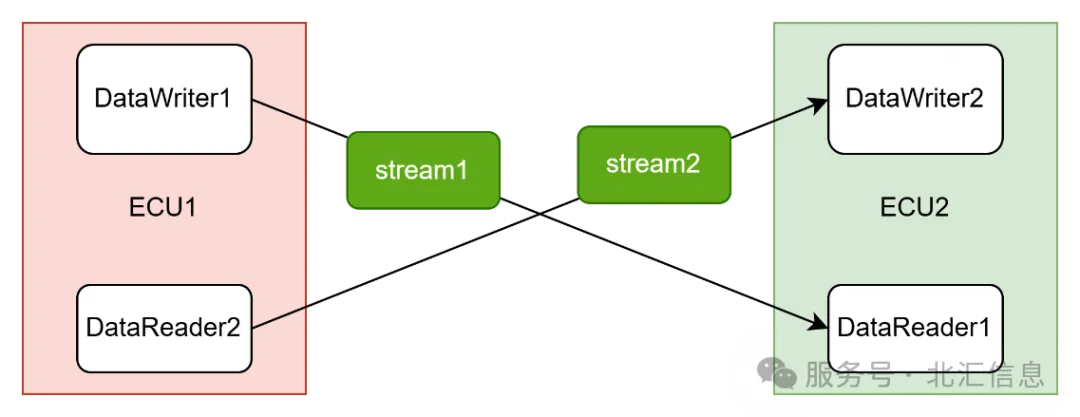
Figure 6 Example of mapping between TSN Talker/Listener and DDS DataWriter/DataReader
Mapping Between Topics and Traffic
In DDS, a Topic can be associated with multiple senders or receivers, automatically mapping to multiple flows. In TSN, traditional data flow transmission is used, requiring a connection between the two and a unique identification for each flow. The specific configuration is as follows:
Each TSN Talker’s provided traffic should undergo flow identification processing, which is an important prerequisite for mapping.
Define Topics based on the output of the previous requirement evaluation step, and map them to TSN flows.
For example, in autonomous driving, some Topic classifications:
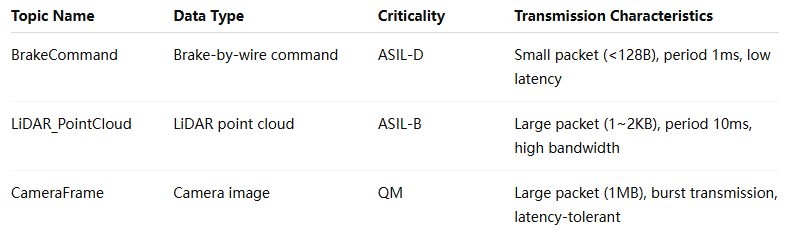
According to the classification principles above, the three Topics can be mapped to corresponding traffic classes: Command-control, Info-data, and Cam-image, as shown below.
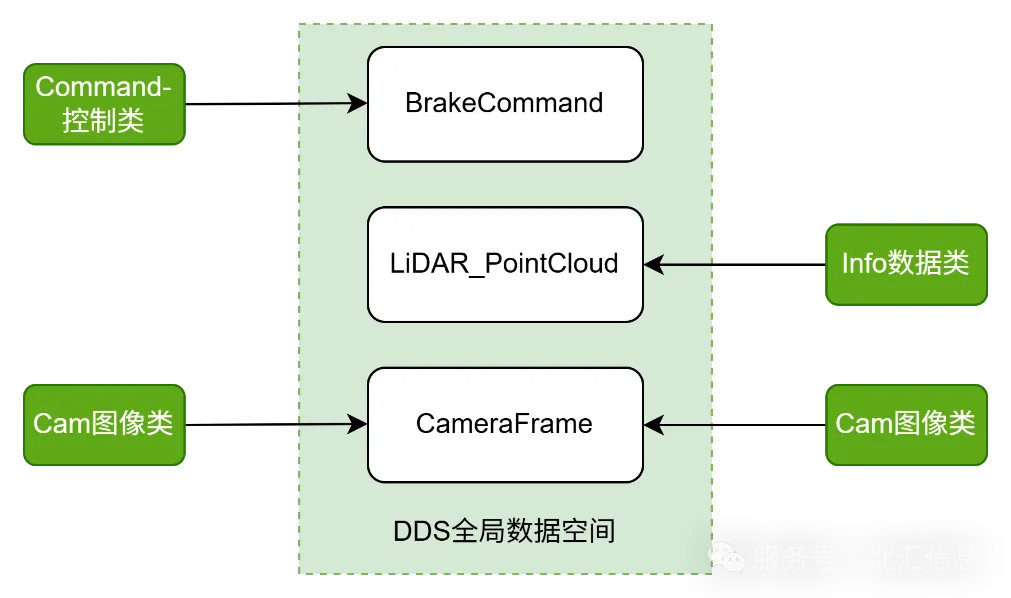
Figure 7 Mapping between Topics and traffic
DDS QoS Policy Design and TSN Scheduling Strategy Mapping
DDS QoS parameters must be mapped to TSN network scheduling strategies to form end-to-end deterministic guarantees. Specific configurations include:
Cross-layer priority passing via VLAN PCP mapping.
Redundancy to cover single-point failure scenarios, ensuring reliable transmission.
Deterministic transmission guaranteed through TSN policies (priority/Qbv).
CBS/ATS reduces switch memory usage.
…
For deterministic transmission, corresponding parameters in TSN strategies (e.g., shaping algorithms, gate open/close times) need to be supplemented as needed in DDS QoS deployment configuration.
For example, in OMG DDS-TSN specification section 7.2.3, the TrafficSpecification includes an additional transmission_selection parameter:
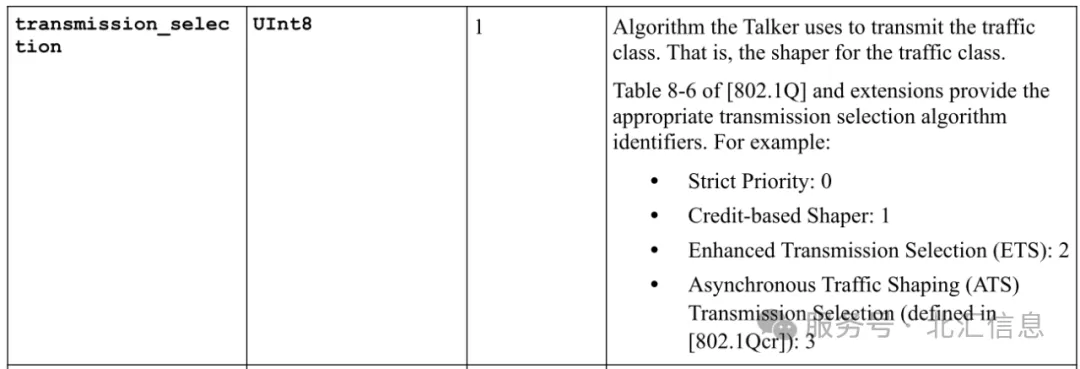
By defining TrafficSpecification in DataWriterQoS, DDS QoS requirements are associated with TSN scheduling to ensure deterministic transmission. Other mappings can be designed and implemented according to actual needs.
DDS-RTPS Layer Processing
RTPS is the default underlying communication protocol of DDS, defining rules for network data exchange between DDS entities (such as Publisher/Subscriber). DDSI-RTPS places minimal requirements on the underlying technology. For deterministic transmission over TSN networks, RTPS requires some special adjustments, such as:
Restrictions on submessage types transmitted in the message module. Reliability submessages in RTPS (such as GAP, ACKNACK, NACKFRAG) are non-essential and should be restricted.
The discovery module (SPDP/SEDP) does not distinguish between TSN and non-TSN applications by default, possibly leading to mismatched communication, requiring constraints between the two.
…
The specific implementation also depends on actual requirements.
Protocol Mapping
OMG proposes two technical approaches to map DDS and TSN data protocols to improve protocol stack efficiency:
RTPS/UDP/IP/TSN: Map RTPS messages to UDP messages, which are transmitted by TSN networks. This solves the indeterminism of traditional Ethernet.
RTPS/TSN: Map RTPS messages directly to Ethernet frames, transmitted by TSN networks. This solves OS network I/O and traditional Ethernet indeterminism.
Both approaches are used in the automotive field. This paper adopts the latter approach.
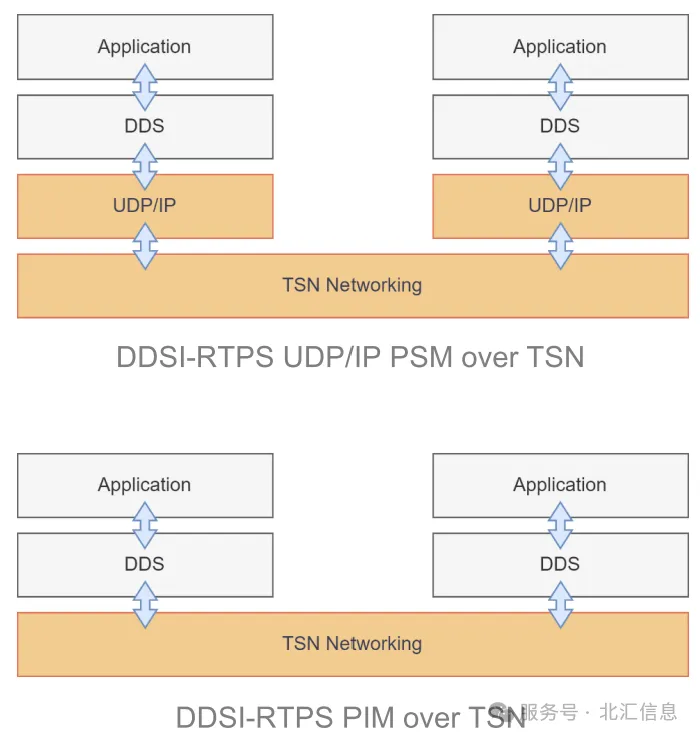
Figure 8 Protocol mapping of DDS-TSN
Prototype Building
DDS-TSN prototype building is divided into hardware and software configuration.
Hardware configuration: Use switches and development boards that support TSN protocols.
Software configuration: Configure and define parameters for integrated TSN and DDS protocol stacks, implementing configuration of TSN and DDS modules for each application component.
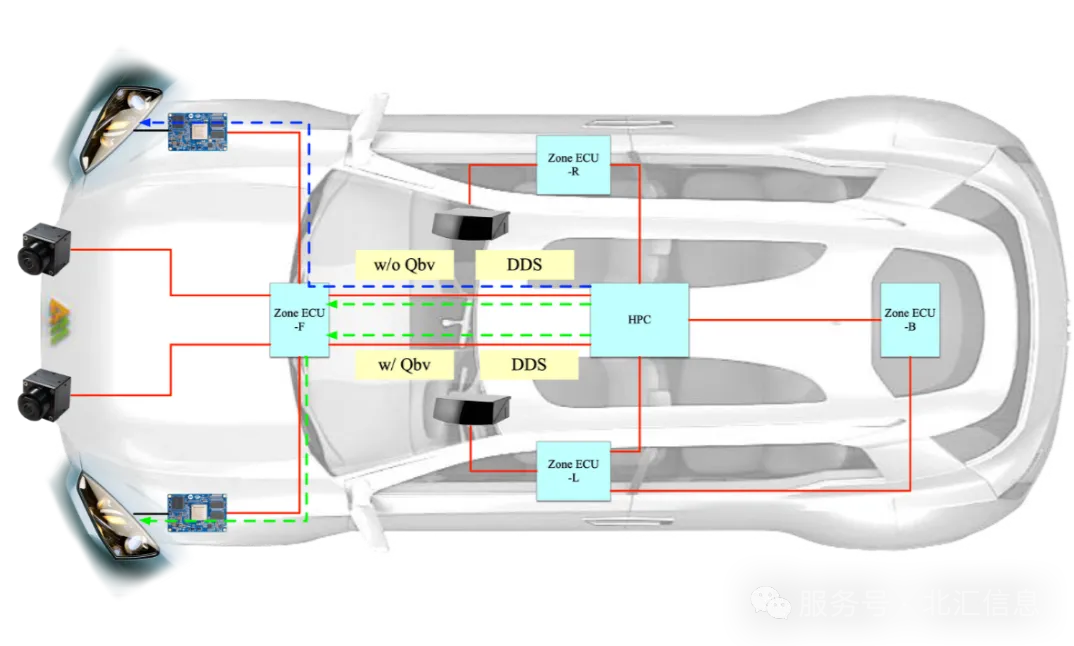
Figure 9 Schematic diagram of the DDS-TSN prototype
Evaluation Metrics Design
The focus throughout is that DDS-TSN can achieve deterministic and reliable end-to-end communication. Therefore, two metrics are used: reliability and deterministic latency.
Reliability Verification
For Topics requiring reliability guarantees, two paths will be deployed for data transmission—one as the primary path and the other as a backup. When the primary path fails, the CB protocol can automatically switch to the backup path to ensure reliability. For comparison, another experiment uses no redundant backup path. The two scenarios are compared to verify whether data transmission is maintained.
Deterministic Latency Verification
To demonstrate deterministic transmission characteristics, the Qbv protocol is used to protect flows. For comparison, another experiment omits Qbv protection. The two scenarios are compared to verify whether data transmission is maintained within the specified time.
Experimental Results
The experiments on the above two metrics yielded the following results:
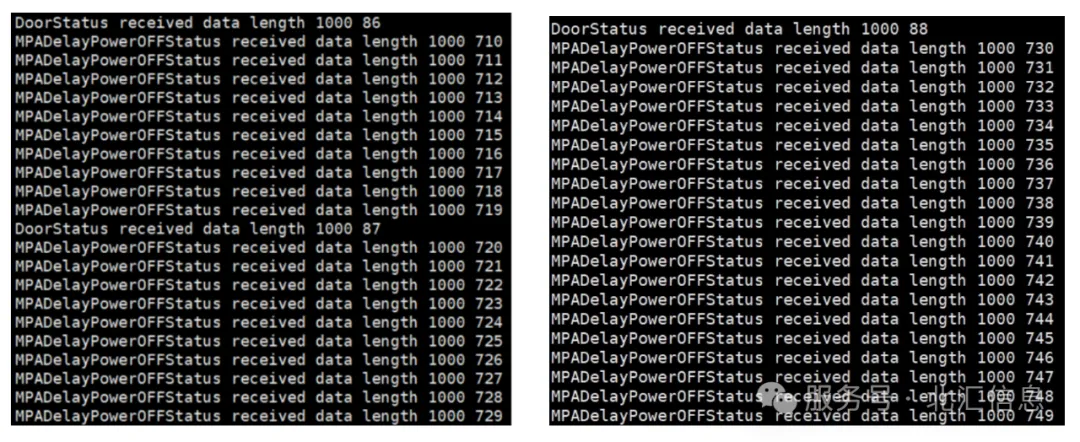
Figure 10 Demonstration of reliability verification results for the DDS-TSN prototype
With CB protection providing backup for critical data flows, a disconnection of one path does not affect data transmission. Without CB protection, if the path used by the data flow is disconnected, data cannot be transmitted.

Figure 11 Demonstration of deterministic latency verification results for the DDS-TSN prototype
Without Qbv protection, data flows are affected by background traffic, leading to increased latency. With Qbv protection, background traffic does not affect the transmission of topic data, ensuring topic data is delivered within the specified time limit.
Conclusion
Through the fine-grained configuration described above, DDS-TSN deeply integrates software-defined data distribution capabilities with hardware-level time determinism, providing a communication foundation that is both fast and accurate for real-time systems. This technology combination is becoming a core infrastructure in fields such as autonomous driving, redefining the performance boundaries of real-time systems.