
Automotive MES solution
With the acceleration of global economic integration, the automotive manufacturing industry is facing increasingly fierce international competition. Enterprises are paying more attention to how to respond rapidly to market changes and continuously improve their services to meet customer demands. Together with the rising informatization requirements from customers, this drives manufacturers to upgrade their production management, reduce manufacturing costs and enhance market competitiveness.
EMFA provides a mature production information management system that effectively plans and balances resources such as people, machines and materials on the shop floor. It enables production data collection and analysis, strictly monitors execution according to process and plan requirements, and provides real, comprehensive and multi-perspective evaluation reports for production and corporate management to support decision-making at every level.
Main Issues
Planners lack effective scheduling tools. Experience-based scheduling cannot balance capacity, due dates, material losses and minimum line-side inventory.
There is no bottleneck analysis during scheduling to anticipate and avoid resource conflicts such as personnel, tools and materials, which are essential to keep production running smoothly.
Shop-floor execution changes constantly and information is hard to capture quickly, leaving most data stuck at the workshop level. Managers can only obtain execution status by physically visiting the shop floor.
Information exchange between the shop floor and management is rather primitive, so floor operators and production managers cannot exchange information in time.
Tasks, process information and BOMs are shown on paper documents on the shop floor, making them inconvenient to view, unfriendly to 5S management and increasing paper costs.
Materials and work-in-process are black boxes on the shop floor and cannot be effectively controlled.
Quality inspection is relatively isolated and data is not shared.
There is no effective statistical analysis to support reliability analysis and optimization of product quality.
Production exceptions cannot be obtained in real time and reported to management, so abnormal issues are not resolved quickly and disrupt production.
No advance warning is provided to anticipate production exceptions; countermeasures can only be taken after problems occur,affecting productivity.

Overall Solution
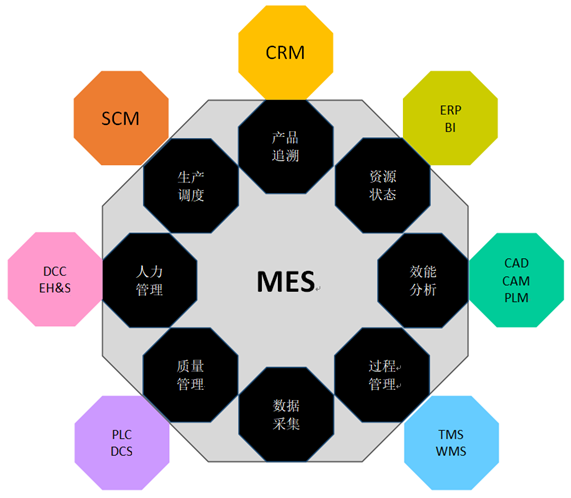
Based on the management requirements of the automotive manufacturing industry and EMFA's years of MES implementation experience in this sector, a complete solution is provided:
Provide a graphical scheduling interface for planners to create, release and adjust work orders.
Detect resource conflicts early through bottleneck analysis and avoid schedule delays caused by resource shortages.
Achieve paperless shop-floor management by displaying production tasks, process information and BOMs electronically.
Achieve shop-floor transparency and information sharing by collecting and automatically feeding back production-process data.
Enable real-time feedback of quality data through paperless management of inspection data: capture, record and store every test item of every part.
Capture quality exceptions in real time and notify responsible personnel by e-mail and other means for rapid response.
Provide the data foundation for production management analysis through multi-dimensional data analysis.
Planning Management
Function Overview
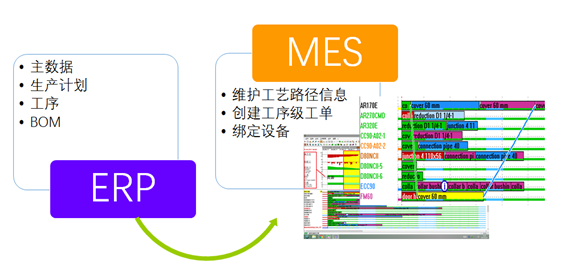
The graphical scheduling interface displays plan execution intuitively and reflects shop-floor status and issues in real time. It provides planners with the data and tools needed to schedule rationally and conveniently.
Supports intelligent scheduling and optimized scheduling based on user-defined scheduling rules, providing a basis for more reasonable and scientific planning.
Detects resource conflicts early through bottleneck analysis and avoids schedule delays caused by resource shortages.
Supports multi-stage scheduling to reasonably arrange upstream and downstream work orders and reduce work-in-process inventory.
Provides material requirements lists and compares them with actual inventory, ensuring no material bottlenecks while minimizing inventory.
Benefits
 Planner efficiency improved by 20%
 Paper costs reduced by 5%
 Equipment utilization rate improved by 10%
 Work-in-process inventory reduced by 10%
Production Execution Management
Function Overview
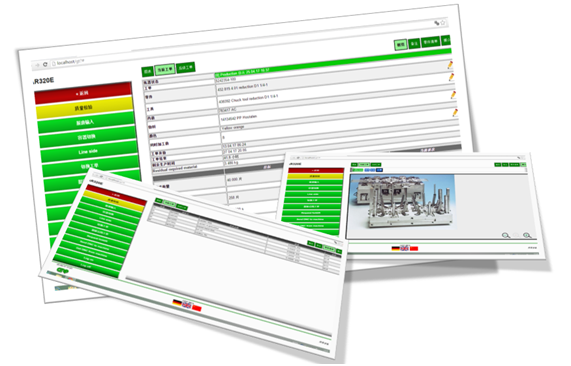
Achieve paperless shop-floor management through electronic display of production tasks, process information and BOMs.
Integrate with shop-floor automation equipment to automatically collect production progress, process data and equipment running parameters, reducing manual entry.
Build archives of production-process data to enable rapid statistical analysis, traceability and query, while reducing paper costs.
Achieve shop-floor information transparency and sharing by automatically collecting and feeding back production-process data.
Achieve rapid shop-floor exception response through real-time collection and feedback of abnormal information.
Benefits
 Management workload reduced by 30%
 Paper costs reduced by 15%
 Equipment utilization rate improved by 10%
Tooling Management
Function Overview
Build a basic tooling file and generate corresponding barcodes bound to each tool for systematic tooling management.
Create a tooling library for inventory management of tools.
Manage tool status and feed it back to the management module to avoid production waiting caused by unclear tool status.
Track tool usage in real time to support subsequent maintenance and repair.
Benefits
 Tooling management staff work efficiency improved by 10%
 Tool service life increased by 10%
 Output increased by 5%
Quality Management
Function Overview
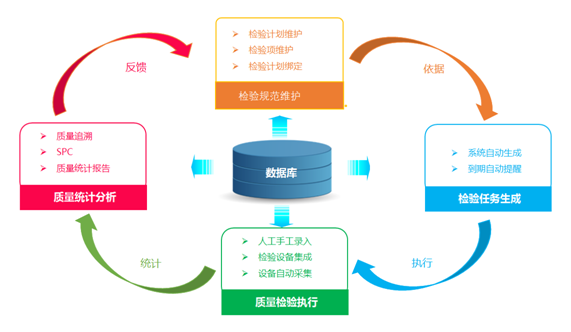
Paperless management of quality inspection data: capture, record and store every test item of every part in real time to enable real-time quality feedback.
Capture quality exceptions in real time and notify responsible personnel by e-mail for rapid response.
Build an inspection database to provide statistical analysis reports for later traceability and continuous improvement.
Achieve global sharing of quality data through systematic management with single-point input.
Benefits
 Quality staff efficiency improved by 20%
 Quality recording and statistical work reduced by 25%; paper costs reduced by 5%
 Quality defects reduced by 20%
Production Monitoring
Function Overview
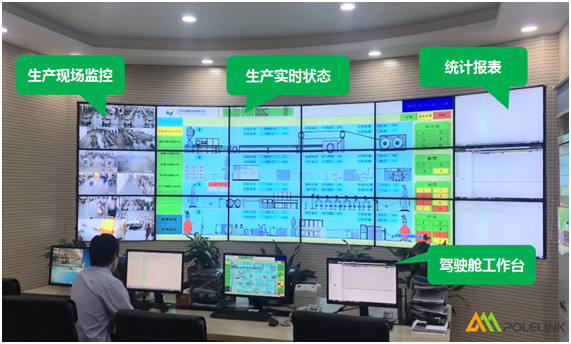
Real-time monitoring of the shop floor reflects the status of equipment, workstations and production lines to support rapid response.
Statistical analysis of historical data provides a basis for management optimization and continuous improvement.
Predictive forecasts of future plans help detect bottlenecks in advance and mitigate risks.
Provide comprehensive real-time graphical analysis based on real-time data.
Provide custom reports: managers can define their own reports based on personal preferences, using any data type captured on the shop floor as input.
Benefits
 Statistics staff workload reduced by 20%
 Recording and statistical work reduced by 20%; paper costs reduced by 10%
 Equipment utilization rate improved by 10%
Equipment Maintenance
Function Overview
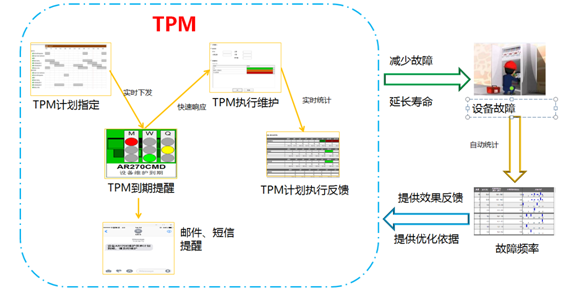
Establish equipment maintenance standards to standardize the maintenance of equipment and tooling.
The system automatically generates maintenance plans and reminds maintenance personnel of due maintenance.
Maintain, store and statistically analyze maintenance execution information to close the maintenance loop.
Benefits
 Equipment service life extended by 5%
 Output increased by 5%
Energy Management
Function Overview
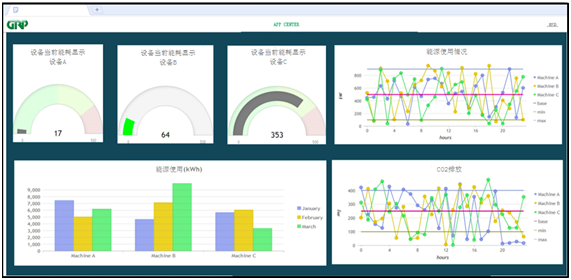
Monitor energy-consumption data
Real-time monitoring of water, electricity and gas to keep track of factory energy consumption
Statistical analysis
Statistical analysis of energy consumption to help enterprises save energy, increase output and reduce costs
Benefits
 Energy losses reduced by 5%
Case Study
Shanghai Automobile Brake System Co., Ltd. (SABS) is a joint venture between Continental AG of Germany and Shanghai Automotive Industry Corporation (Group). The company's main products include ABS anti-lock braking systems, brake calipers, boosters, sensors and brake hoses. Its production involves three processes: machining, electroplating and assembly.
SABS adopted several modules of EMFA's MES system, including advanced scheduling, production monitoring, quality management, equipment maintenance and production traceability. After project implementation, production conditions were significantly improved:
Shorter plan-making time, more reasonable planning, higher work-order fulfilment rate and less semi-finished goods accumulation on the shop floor;
Maximized capacity through improved bottleneck-equipment utilization;
Real-time shop-floor progress monitoring and timely feedback of abnormal information;
Improved in-process quality through quality control;
Captured quality data for traceability, analysis and improvement, reducing manual work and supporting after-sales service;
Automatic equipment-maintenance reminders extended equipment service life.